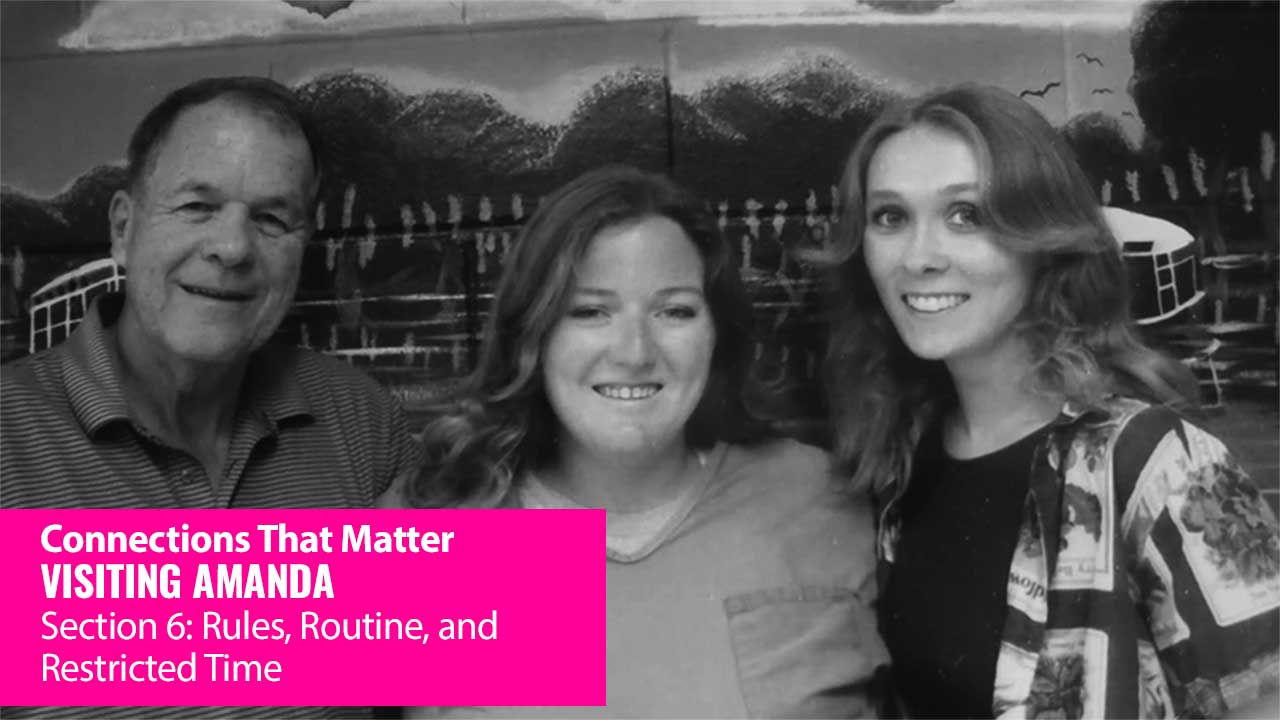
At one point, a new guard entered the visiting center and spoke with the supervising guard near the door. Another inmate, seated at a table to our left, was playing cards with what I assumed was her boyfriend. The guards said something to him and escorted him out the door. The inmate asked, “What’s wrong? Why did he have to leave?” The guards instructed her to return to her dorm, so she left the visiting center looking on the verge of tears.
Chris shared that during visiting hours, drug dogs walk past all the cars as a smuggling prevention measure. He guessed that the drug dog picked up on the smell of a substance, and the visitor was forced to leave because of it. Even medical or recreational marijuana obtained legally can get you removed from the property. Guards also check each car to ensure the doors are locked.
Chris once forgot to lock his car and had to exit the prison, lock it, and redo the entry security procedures to continue his visit, a simple mistake that subtracted from his time with Amanda. This protocol is designed to prevent inmates from hiding in cars in the event of an escape.
Additionally, guards conduct counts every few hours to verify that all inmates on the premises are accounted for. One of these counts occurs at 12 PM, during visiting hours, and lasts for 5-10 minutes. When the clock struck noon, Amanda and the other inmates, led by guards, left the building, lined up outside, and returned when the count was complete. This procedure is a daily aspect of the strict schedule inmates adhere to in prison. Breakfast is served at 5:30 AM, with no additional meal served until dinner, at 3:30 PM. This 10-hour gap is filled with free time indoors and yard hours from 1:00/1:30-3:00 PM. More yard hours are offered, after dinner is served, from 4:00 to 6:30 PM.
Many inmates fill their yard time with physical activities, such as volleyball, which Amanda plays every day. This exercise, accompanied by Florida’s grueling heat, is a recipe for burning calories and fueling hunger. Inmates with money are allowed access to the commissary, which offers additional drinks, food, and hygiene items outside of what’s provided by the state. Some inmates cannot access this resource because they have nobody on the outside willing or able to provide the money, so they sit in that hunger until breakfast, 14 hours after dinner.